
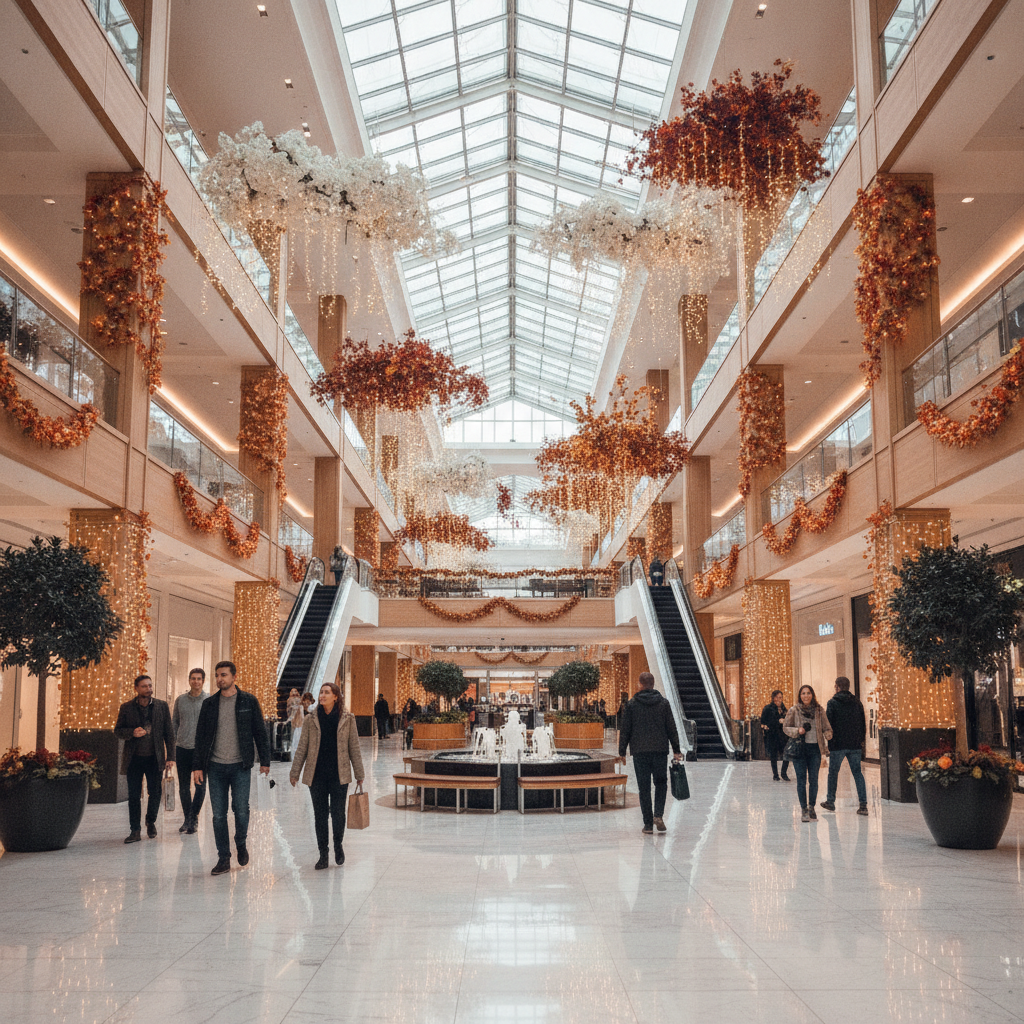
Think about the last place you visited during the holidays that made you slow down and stay a while. Chances are it was not the discount signs that held you there. It was the feeling of the space: the warm glow, the familiar scents, the small surprises around every corner. That feeling is the real product a shopping center sells during the busiest weeks of the year, and it is built through thoughtful retail center holiday decorating that treats the property like a story rather than a collection of storefronts.
Most conversations about seasonal décor focus on what to hang and where to plug it in. This article takes a different angle. We will look at decoration as an experience design problem, one that is about memory, emotion, and the way people move through a space. Whether you manage a neighborhood strip, run a boutique in an open-air plaza, or develop large mixed-use properties, the same principles apply. People remember how a place made them feel, and they return to the places that feel good.
We will walk through the psychology behind memorable seasonal spaces, the sensory layers that go beyond lighting, ways to design for photos and sharing, tenant coordination, accessibility, sustainability, budgeting, and how to measure whether your efforts are working. You will also find a practical comparison table and a closing checklist you can use for your next planning cycle. The goal is simple: help you create a season that guests talk about long after the lights come down.
Why Memory Beats Decoration Every Time
A pile of ornaments does not create loyalty. A moment does. Behavioral researchers have long noted that people judge an experience by its peak moments and its ending, which means a single standout feature can define the entire visit in a guest’s mind. For a shopping center, that might be a towering centerpiece, a walk-through light tunnel, or a quiet courtyard that feels like a pause in a hectic day.
Planning around moments changes how you spend. Instead of spreading a modest budget thinly across every surface, you concentrate resources on two or three anchor experiences and support them with consistent, cohesive touches elsewhere. Many property teams lean on professional holiday decor specialists at this stage because experienced designers know how to identify the points of a property where a guest naturally pauses, and how to turn those pauses into lasting impressions.
Start by walking your property as a first-time visitor. Note where you slow down, where you speed up, and where your eye gets stuck. Those natural rhythms are the map for your design.
Designing the Guest Journey From Curb to Checkout
Every visit has a sequence: arrival, wayfinding, browsing, lingering, and departure. A strong seasonal concept speaks to each stage differently. At arrival, decoration should announce that something special is happening without overwhelming the sightline to your tenants. During wayfinding, subtle cues such as garlands along walkways or lantern lines can guide people toward key destinations while still feeling festive.
The lingering stage is where most centers underinvest. Guests who pause are guests who spend, so create reasons to pause: comfortable seating framed by greenery, a warm gathering spot near food tenants, or a small interactive display for families. A well-planned seasonal mall display design treats these zones as destinations in their own right rather than afterthoughts.
Finally, do not forget departure. The last thing a guest sees on the way to the car shapes the memory they carry home. A glowing archway at the exit or a warm farewell message on a banner can leave a surprisingly strong final impression and encourage a return visit before the season ends.
Engaging More Than the Eyes
Light is only one channel. The most memorable spaces layer in sound, scent, and texture so the experience feels complete. Soft instrumental music at a comfortable volume, played consistently across common areas, creates a unified mood. Natural greenery, even in artificial form, adds visual depth, and real evergreen scent near entrances can trigger instant seasonal associations.
Texture matters too. Think about the materials guests actually touch or sit near: wrapped columns, plush seating cushions, wooden signs, woven baskets. When these elements share a coordinated palette, the space reads as intentional and premium rather than cluttered. Metallic accents catch light beautifully at night, while matte natural tones feel calmer during the day.
A word of caution: sensory layering works best when it is restrained. Scent should be subtle, music should never compete with conversation, and lighting should never glare into guests’ eyes. The aim is comfort, not spectacle for its own sake. If a visitor says the place just felt nice without knowing why, you have done it right.
Building Moments Guests Want to Photograph
Social sharing is free advertising, and it travels farther than any paid campaign. Designing for photos is not about gimmicks; it is about giving guests a beautiful frame. A large wreath arch, an oversized ornament cluster, or a softly lit backdrop with a clear spot to stand makes it easy for families to capture the season together.
Lighting quality determines whether a photo looks magical or flat. Warm white tones flatter skin and create a cozy feel, while color-changing effects can look exciting in video but harsh in still shots. Plan the photo spots so that background clutter, such as trash bins or utility boxes, stays out of the frame.
Add a simple, memorable hashtag or a small sign inviting guests to share their pictures, and consider rotating the feature through the season so repeat visitors always find something new. If you want inspiration on what is possible, you can learn more here by browsing a gallery of completed installations and noting which compositions invite people to stop and snap a picture.
Bringing Tenants Into the Story
A center feels cohesive when its tenants feel like participants rather than bystanders. Yet many properties treat storefront decoration as the tenant’s problem and common-area decoration as the landlord’s, leaving visible seams between the two. A shared seasonal theme, even a loose one, helps both sides look better.
Offer tenants a simple style guide: an approved color palette, suggested lighting temperatures, and a few optional kits they can purchase or borrow. This keeps the overall look consistent while still allowing each brand to express its personality. For a deeper look at how large properties coordinate these layers, the guide on Transforming Retail Centers Into Holiday Wonderlands offers helpful context on bringing a whole center together under one vision.
Communication timing matters as much as the style guide. Share your concept early, set clear installation windows, and confirm electrical access before anything goes up. Tenants who feel informed and supported are far more likely to invest in their own displays, which multiplies the impact of your efforts across the entire property.
Choosing Materials That Survive the Season
Decorations face real punishment: sun, wind, foot traffic, curious children, and weeks of continuous operation. Choosing commercial-grade materials is less glamorous than picking a theme, but it determines whether your display still looks crisp in the final week. Cheap residential products often fade, tangle, or fail long before the season ends.
In hot, sunny climates such as the Sonoran region around Mesa, UV resistance should be near the top of your specification list. Plastics that yellow or become brittle, and fabrics that bleach under intense light, can make a display look tired by mid-season. Ask suppliers about weather ratings, fade resistance, and replacement policies before you commit.
Anchoring and weight are equally important. Tall pieces need proper ballast or ground fixing so a gust of wind does not turn a centerpiece into a hazard. Cable routing should be planned so cords never cross walking paths. These details rarely appear in a concept sketch, but they separate a polished installation from a risky one.
Making Seasonal Spaces Welcoming for Everyone
A truly memorable experience is one every guest can enjoy. Inclusive design starts with simple physical considerations: keep pathways clear and wide enough for strollers and wheelchairs, avoid placing displays where they create bottlenecks, and make sure seating areas are reachable without steps whenever possible.
Sensory comfort is another overlooked factor. Flashing lights, loud audio, and strong fragrances can be overwhelming for some guests, including children with sensory sensitivities and people prone to migraines. Consider designating a quieter zone with steady, soft lighting and minimal sound so everyone has a place to rest. Some centers also host calm shopping hours with reduced effects.
Cultural awareness deserves thought as well. Many communities celebrate a range of winter traditions, so a theme built around light, warmth, gathering, and generosity can feel welcoming to a broad audience. When guests see themselves reflected in a space, they are more likely to feel at home there and to come back.
Smart Lighting Without the Waste
Lighting is the backbone of most seasonal designs, and it is also the largest recurring operating cost. Modern LED fixtures use a fraction of the power of older incandescent strings and typically last far longer, which reduces both utility spend and replacement labor. Timers and photocell controls ensure displays run only when guests are present to enjoy them.
Beyond efficiency, thoughtful lighting design avoids visual noise. Rather than covering every surface, choose focal points and let darker areas provide contrast. Layer different heights, such as ground uplights, mid-level wrapped trunks, and canopy strands, to build depth. Consistent color temperature across the property keeps the overall look unified.
For properties exploring broader upgrades, this overview of Transforming Shopping Centers with Expert Decor and Lighting Services explains how seasonal lighting can connect with year-round illumination strategies, helping you get more value from the same infrastructure long after the holidays pass.
Setting a Realistic Budget and Timeline
Strong ideas fail without a plan to deliver them. Work backward from your target launch date, building in time for design approval, material ordering, permitting where required, installation, and a testing window before opening night. Many projects run into trouble not because of the concept, but because lead times were underestimated.
Budgeting is easier when you divide costs into categories: design, materials, installation labor, power and controls, maintenance during the season, and removal and storage. Costs vary widely depending on property size, complexity, and whether you purchase or rent. Rather than guessing, request itemized proposals so you can compare options fairly and spot where savings are realistic.
Consider a multi-year approach as well. A core set of durable pieces can be reused and refreshed each year with new accents, which spreads the investment and builds recognition. Guests begin to associate your property with a signature look, and that familiarity becomes an asset in itself.
Comparing Common Seasonal Display Approaches
Different properties need different strategies. The table below summarizes how three popular approaches compare, so you can match the method to your goals, space, and resources.
| Approach | Best For | Typical Trade-Off |
|---|---|---|
| Single signature centerpiece | Small to mid-size centers wanting a strong focal point | High impact in one spot, limited coverage elsewhere |
| Property-wide cohesive theme | Large or mixed-use properties seeking a unified identity | Higher cost and longer planning timeline |
| Interactive experience zones | Family-oriented centers aiming to extend visit length | Needs staffing, safety planning, and upkeep |
Measuring Whether the Magic Worked
Decorating without measuring is guessing. Before the season begins, decide what success looks like. It could be higher foot traffic, longer average dwell time, increased tenant sales, stronger social engagement, or simply positive guest feedback. Having a defined goal keeps the project focused and makes it easier to justify next year’s investment.
Practical tools do not need to be complicated. Foot counters, tenant sales reports shared voluntarily, social media mentions, and short guest surveys all provide useful signals. Compare results against the same weeks in the prior year, keeping in mind that weather, calendar shifts, and economic conditions also affect traffic.
Pay attention to qualitative clues as well. Which features did guests linger near? Which areas were ignored? What did tenants and staff say? After removal, hold a short debrief and write down lessons while they are fresh. Those notes become the foundation for a smarter, sharper design next season, and over time they turn a good program into a distinctive one.
Your Next Steps
Creating a memorable seasonal experience comes down to a handful of repeatable principles. Design for moments, not just surfaces. Walk the guest journey from arrival to departure and give people reasons to pause. Layer sound, scent, and texture alongside light, but keep everything restrained and comfortable. Build photo-friendly spots that invite sharing, and bring your tenants into the story so the whole property feels unified.
Behind the scenes, choose durable materials, plan for safety and accessibility, and make lighting efficient so your operating costs stay under control. Set a realistic budget and timeline, think in multi-year terms, and measure results so each season teaches you something useful. These habits turn retail center holiday decorating from an annual chore into a genuine competitive advantage.
If you are ready to begin, here is a simple starting checklist: walk your property as a visitor, identify two or three anchor moments, define your goals, request itemized proposals, share a style guide with tenants, and schedule a post-season review. Small, deliberate steps early in the planning cycle prevent most last-minute stress.
Ultimately, people do not remember square footage or fixture counts. They remember how a place made them feel on a cold evening with the people they love. Build that feeling intentionally, and your center will earn something no advertisement can buy: a spot in the traditions of the community it serves.
0 Comments